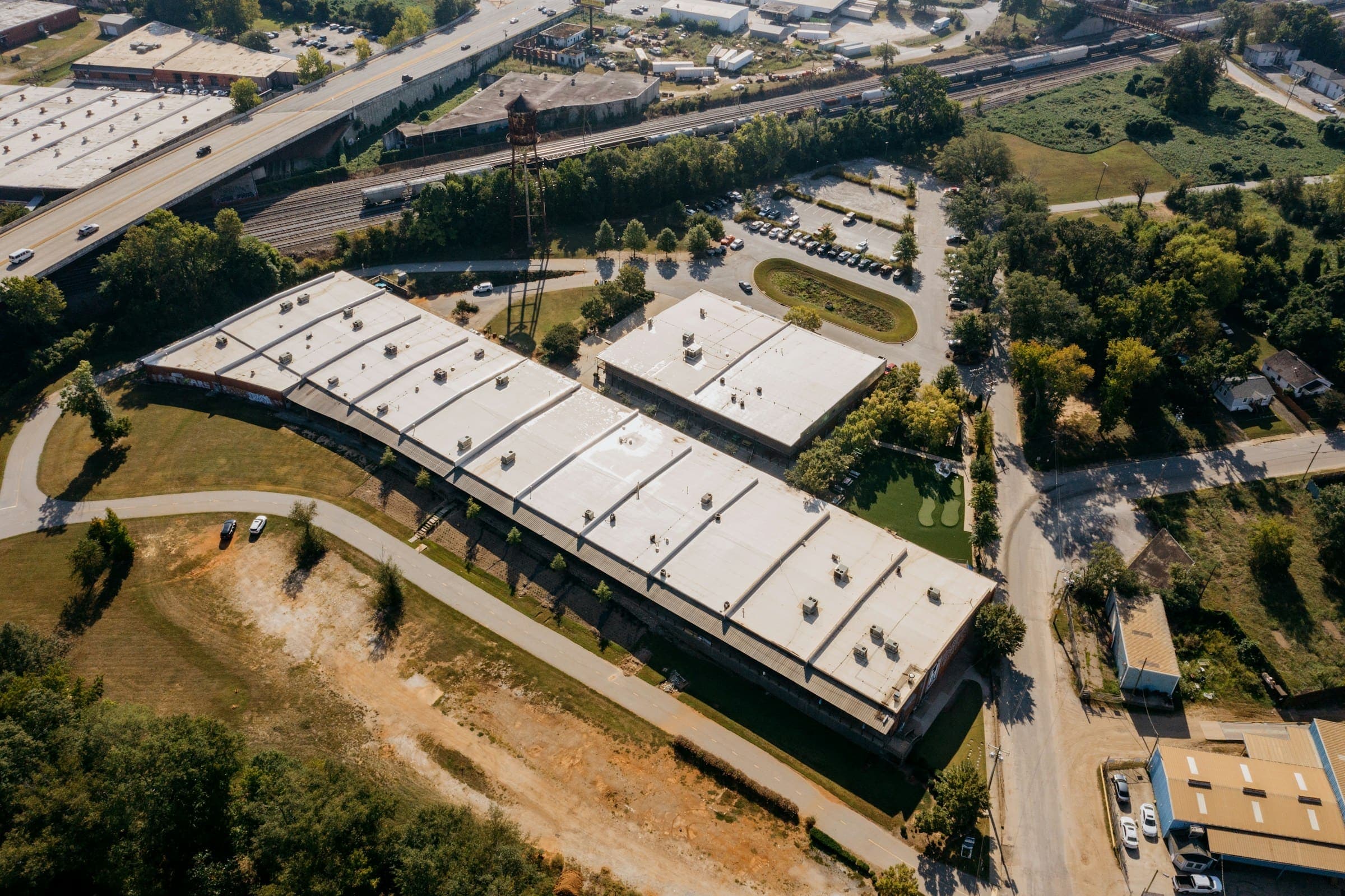
Commercial · Roof replacement
Replace, recover or restore — decided by data, not by the bid.
A commercial roof project can cost very different amounts depending on how much of the old roof can stay. We survey the existing assembly first so the recommendation is based on what’s wet and what isn’t.
- Photo-documented
- Written line-item scope
- Across Texas
Three paths, one survey
Before recommending anything, we map moisture in the existing roof with an infrared scan or core samples. Building codes generally allow a recover only over a single existing roof that is dry and sound, so this survey decides your options.
From there you get a written comparison of the paths that are actually available, with expected service life and cost side by side.
Options
Tear-off, recover or restore
| Full tear-off | Recover | Coating restoration | |
|---|---|---|---|
| When it fits | Wet insulation, multiple layers, or deck problems | One dry, sound existing roof | Sound membrane with surface aging and limited wet areas |
| What happens | Remove to deck, repair deck, new insulation and membrane | New cover board and membrane over existing roof | Clean, repair, and apply fluid-applied coating system |
| Disruption | Highest | Moderate | Lowest |
| Relative cost | $$$ | $$ | $ |
| Code / energy | Brings insulation to current energy code | May add insulation | Reflective coatings reduce heat gain |
Wet areas found in a survey are removed and replaced in a recover or restoration — leaving wet insulation in place traps moisture.
Systems
Roof systems we install
Process
How commercial projects run
Survey & options
Moisture survey, core cuts, drainage review and written options with service-life comparison.
Specification & bid
Detailed spec and line-item proposal, including allowances for deck repair and unit pricing.
Phasing plan
Work zones, crane days, staging and tenant notices planned around operations.
Installation
Weather-tight at the end of every work day. Daily photo log available to the owner.
Close-out
Final inspection, manufacturer warranty inspection where applicable, as-built roof plan and warranty documents.
Pricing
What drives commercial roof cost
Commercial roofs are priced per square foot, but the spread is wide. These are the major variables.
- Wet area percentage
- Every square foot of wet insulation has to be removed and replaced.
- Insulation requirements
- Tear-offs typically must meet current energy code R-values, which can add significant insulation.
- Rooftop equipment
- HVAC curbs, pipes and supports all need flashing; units may need lifting.
- Access and staging
- Crane time, height, and how close we can stage to the building.
- Warranty level
- Longer manufacturer warranties require specific assemblies and inspections.
Can the building stay open during replacement?
In most cases, yes. We phase the work, keep each section watertight at day’s end, and schedule noisy or odorous work around tenants.
How long does a commercial replacement take?
It depends on area, system and weather. After the survey, your proposal includes a realistic schedule for your building.
Do you provide manufacturer warranties?
Manufacturer system warranties are available when the installing contractor is authorized for that system. We confirm exactly which warranties are available for your specification in writing.
Next step
Start with a moisture survey
Know what’s wet before anyone prices a roof. We’ll map the existing assembly and show you which options are on the table.